 TETSU
TETSUCable Cross-Over Reverse Fly
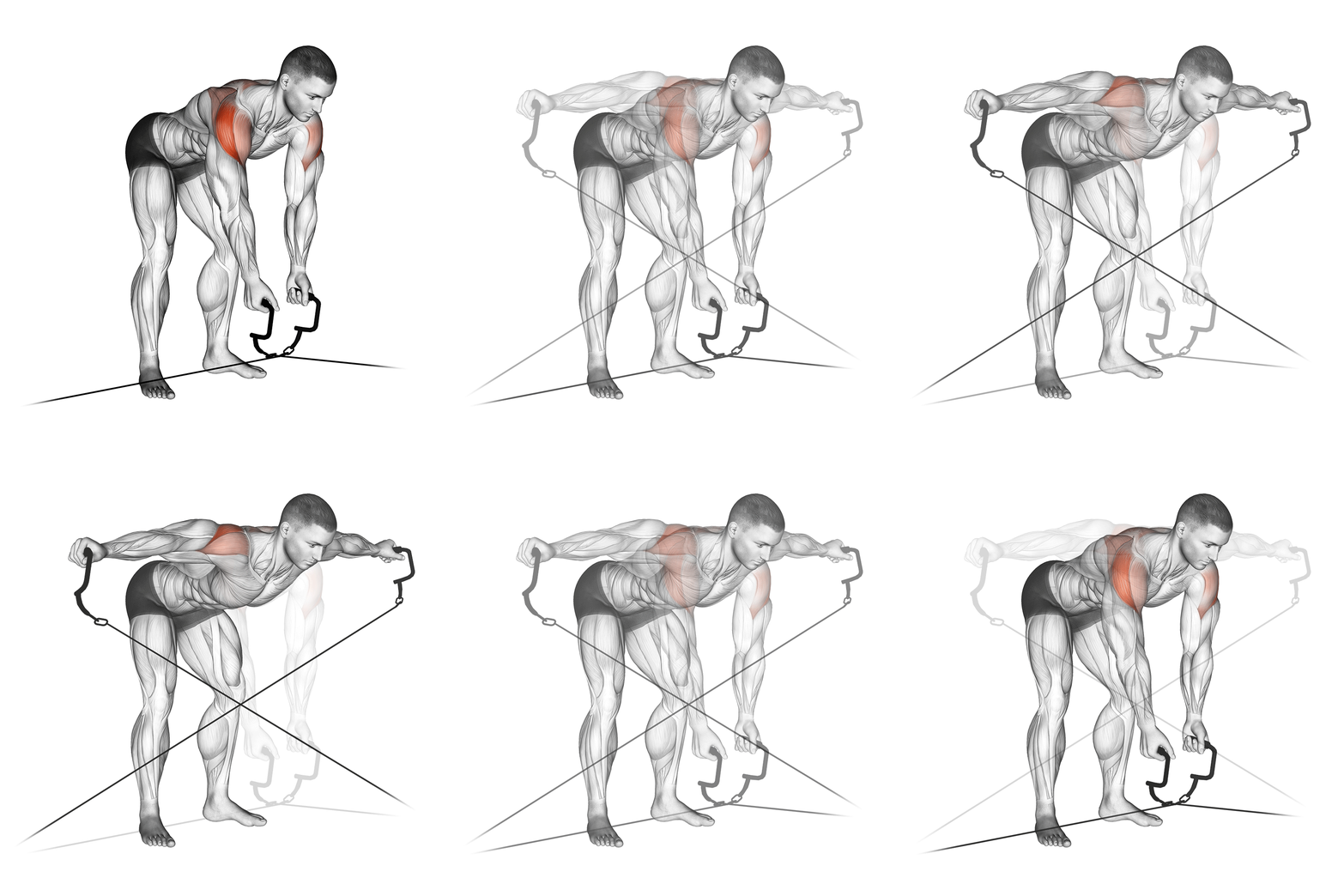
The Cable Cross-Over Reverse Fly is a cable exercise for the shoulders that primarily targets the delts, with the rhomboids and trapezius assisting. Follow the 6 steps below for correct form, with an animated demonstration.
How to do the Cable Cross-Over Reverse Fly
- Attach a D-handle to each low pulley cable and stand in the middle of the cable crossover machine.
- Grasp the handles with a pronated grip (palms facing down) and take a step forward, positioning your feet shoulder-width apart.
- Bend your knees slightly and lean forward at the waist, keeping your back straight and your abs engaged.
- With your arms extended out to the sides and slightly bent at the elbows, exhale and squeeze your shoulder blades together as you pull the cables back and upward in a reverse fly motion.
- Pause for a moment at the peak contraction, then inhale and slowly return to the starting position.
- Repeat for the desired number of repetitions.
Common questions
What muscles does the Cable Cross-Over Reverse Fly work?
The Cable Cross-Over Reverse Fly primarily targets the delts. The rhomboids and trapezius work as supporting muscles.
What equipment do I need for the Cable Cross-Over Reverse Fly?
You need a cable machine to perform the Cable Cross-Over Reverse Fly.
How many sets and reps of the Cable Cross-Over Reverse Fly should I do?
For muscle growth, 3 to 4 sets of 8 to 12 reps of the Cable Cross-Over Reverse Fly works well. For strength, use heavier loads for 3 to 6 sets of 3 to 6 reps and rest 2 to 3 minutes between sets. Add weight or reps gradually over time.
Track it in Tetsu
Log your sets, see your shoulders volume climb, and let AI plan your week. Scan the code or grab the app — free to start.