 TETSU
TETSUCable Standing Twist Row (V-Bar)
The Cable Standing Twist Row (V-Bar) is a cable exercise that primarily targets the upper back, with the biceps and shoulders assisting. Follow the 10 steps below for correct form, with an animated demonstration.
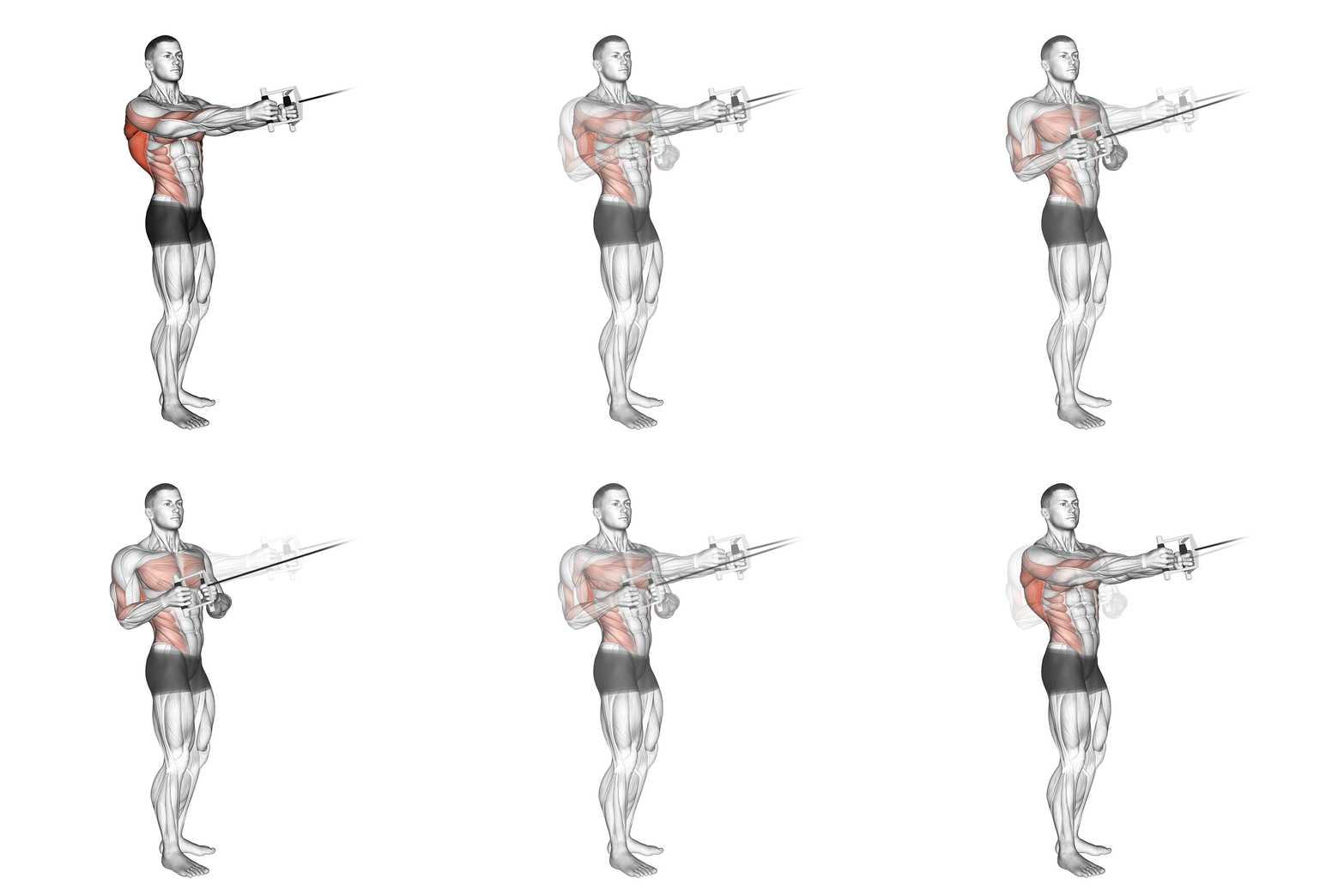
How to do the Cable Standing Twist Row (V-Bar)
- Attach a v-bar attachment to a cable machine at chest height.
- Stand facing the cable machine with your feet shoulder-width apart.
- Grasp the v-bar with an overhand grip, palms facing down.
- Take a step back to create tension in the cable.
- Keep your back straight and core engaged throughout the exercise.
- Pull the v-bar towards your torso by retracting your shoulder blades and bending your elbows.
- As you pull, twist your torso to one side, squeezing your shoulder blades together.
- Pause for a moment at the top of the movement, feeling the contraction in your upper back.
- Slowly release the tension and return to the starting position, untwisting your torso.
- Repeat the movement for the desired number of repetitions, alternating the twisting direction with each rep.
Common questions
What muscles does the Cable Standing Twist Row (V-Bar) work?
The Cable Standing Twist Row (V-Bar) primarily targets the upper back. The biceps and shoulders work as supporting muscles.
What equipment do I need for the Cable Standing Twist Row (V-Bar)?
You need a cable machine to perform the Cable Standing Twist Row (V-Bar).
How many sets and reps of the Cable Standing Twist Row (V-Bar) should I do?
For muscle growth, 3 to 4 sets of 6 to 10 reps of the Cable Standing Twist Row (V-Bar) works well. For strength, use heavier loads for 3 to 6 sets of 3 to 6 reps and rest 2 to 3 minutes between sets. Add weight or reps gradually over time.
Track it in Tetsu
Log your sets, see your back volume climb, and let AI plan your week. Scan the code or grab the app — free to start.